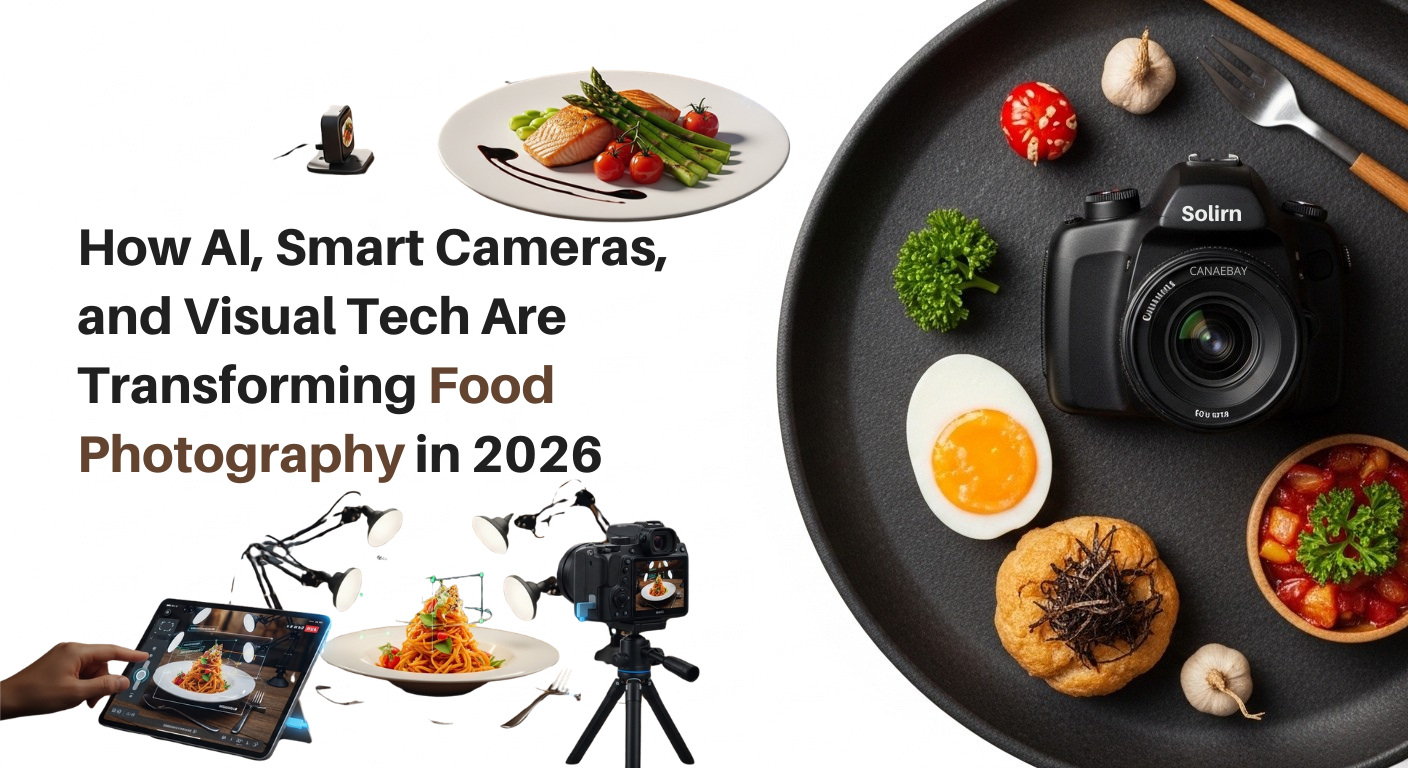
Remember when taking a decent photo of your dinner meant juggling a DSLR, three studio lights, and a prayer? Those days feel like ancient history now.
In 2026, food photography has gone through a massive shift. Artificial intelligence, smart camera technology, and new visual tools are changing everything from how a small cafe shoots its menu to how global brands run million-dollar campaigns.
Whether you're a restaurant owner, a food blogger, or a working photographer, you need to understand what's happening right now. AI doesn't just edit photos anymore. It composes them, lights them, tests which version sells best, and even predicts what will get the most clicks.
The Rise of AI-Powered Food Photography Tools
AI is everywhere in food photography now, and it's earned its place.
A few years ago, AI meant auto-brightness or a quick filter. Today it's a different world. AI tools can analyze your raw smartphone photo, identify the dish, fix the lighting, swap the background, and deliver a polished result in under 60 seconds.
Platforms like MenuPhotoAI, FoodShot AI, and others have made professional-grade imagery accessible to almost everyone. A restaurant that used to pay $500 to $2,000 per photo session can now get polished results for $15 to $29 per month. That's not an upgrade. That's a revolution.
AI Image Enhancement vs. AI Image Generation
There are two very different AI approaches happening right now, and understanding the difference matters.
- Enhancement means you take a real photo of your actual dish, upload it, and AI improves lighting, sharpens details, adjusts colors, and swaps backgrounds. The food stays real. It just looks like a pro spent an hour on it.
- Generation means tools like DALL-E or Midjourney create food images entirely from text prompts. You describe "a steaming ramen bowl on dark wood with moody backlighting" and the AI builds a photorealistic image that never existed.
Both have their place. But they carry very different risks. Research from UK-based firm Slerp found that consumers can often spot AI-generated food images, and trust drops when they feel deceived.
| Feature | AI Enhancement | AI Generation |
|---|---|---|
| Source Material | Your real food photos | Text descriptions or prompts |
| Accuracy to Real Dish | High it's your actual food | Variable AI imagines the dish |
| Best For | Menus, delivery apps, social media | Concept art, marketing campaigns |
| Cost | $15–$50/month | Often free or subscription-based |
| Delivery Platform Compliance | Generally compliant | May conflict with accuracy rules |
| Time to Result | 30–90 seconds | 10–60 seconds |
| Consumer Trust Level | High | Lower — risk of "AI slop" backlash |
For most restaurants, enhancement is the safer bet. For creative campaigns or testing concepts before a real shoot, generation saves enormous time and money.
AI-Powered A/B Testing for Food Visuals
Most food photography guides completely ignore the marketing intelligence side of AI. That's a mistake.
In 2026, taking a beautiful photo isn't enough. You need to know which beautiful photo actually drives sales. AI tools now let brands generate multiple versions of the same dish different backgrounds, angles, color temperatures and test them against each other before committing to a campaign.
This used to take weeks and big budgets. Now it takes minutes. About 70 percent of creative agencies expect AI to be central to their workflow by 2026, and rapid visual testing is a big reason why.
Key benefits of AI-powered A/B testing:
- Generate five to ten visual variations from a single base photo in seconds
- Test bold colors versus muted tones to see which gets remembered (bold colors are up to 80 percent more likely to stick)
- Compare overhead angles against 45-degree shots and let data decide
- Eliminate guesswork from campaign decisions
- Optimize images for specific platforms before launching
The brands doing this well aren't just taking better photos. They're making smarter decisions about which photos to use.
Smart Cameras Are Changing the Game
AI editing tools are only half the story. The cameras themselves have gotten dramatically smarter.
Mirrorless Cameras Dominate the Pro Scene:
Mirrorless cameras now own the commercial food photography world. They offer high-resolution sensors, real-time exposure previews, and seamless tethering for instant client reviews on a connected screen.
Full-frame models from Sony, Canon, and Nikon deliver dynamic range that captures every detail from the sheen on a sauce to char marks on grilled vegetables. In-body stabilization means even handheld shots in dim restaurants come out sharp.
But the biggest change is on-board AI. Modern cameras detect when you're photographing food and automatically adjust white balance, exposure, and focus. Google's Pixel 10 series features an AI Camera Coach that gives real-time advice on framing and lighting while you shoot.
The global AI camera market reflects this momentum projected to grow from roughly $19 billion in 2026 to over $82 billion by 2034.
Smartphones Are Now Legitimate Tools:
Here's a truth that would've gotten laughs in a photography forum five years ago: smartphones are serious food photography tools now.
The latest iPhone and Google Pixel models use computational photography to punch well above their sensor size. Night mode handles dim restaurants. Portrait mode creates creamy bokeh. Smart HDR balances tricky highlights and shadows.
Professional side-by-side tests show smartphone images matching cameras costing thousands at least for social media, delivery apps, and web use. For cookbooks and magazine spreads, dedicated cameras still win. But for the 80 to 90 percent of daily needs, a good phone plus an AI tool does the job.
The Amazfit V1TAL: A Glimpse Into Tomorrow:
The most fascinating camera development this year is the Amazfit V1TAL Food Camera from CES 2026. It sits near your plate, records your meal automatically, and uses AI to identify ingredients, estimate portions in three dimensions, and track eating patterns.
It's designed for health tracking, not traditional food photography. But it signals something important: camera technology is moving beyond capturing pretty images toward understanding food itself. As this visual analysis matures, expect it to influence commercial food styling and presentation too.
Cloud-Based Collaboration Is Transforming Food Shoots

Most food photography articles skip this topic entirely. That's a miss, because it's changing the day-to-day reality for professionals.
Cloud-based collaboration tools now let photographers tether cameras to platforms where clients review and approve images in real time from anywhere. Some studios live stream entire shoots for instant feedback.
Why this matters:
- Eliminates the "send files, wait for feedback, reshoot next week" cycle
- Clients in New York can direct a shoot in Los Angeles without flying
- Fewer misunderstandings mean fewer costly reshoots
- Energy stays focused on getting the shot right, not managing logistics
- Faster turnaround for campaigns across multiple markets
For food brands running multi-market campaigns, this is a game-changer. The process is more streamlined, more efficient, and ultimately more creative.
Interactive and Shoppable Food Images
Static photos are no longer enough. In 2026, brands are building interactive food images where customers can hover over dishes for ingredient details, spin plates in 360 degrees, or tap to add items directly to their cart.
Meal kit companies were early adopters, letting customers preview recipes visually before ordering. The results speak for themselves conversion rates jump by up to 35 percent with shoppable images compared to traditional static photos.
This changes the purpose of food photography entirely. The image isn't just eye candy anymore. It's a functional part of the buying experience.
Augmented Reality Menus: See Before You Order
AR menus have moved faster than most people realize.
Customers can now point their smartphones at a restaurant menu and see 3D models of dishes appear on screen complete with realistic textures, garnishes, and even animated steam. Some AR menus go further with interactive features:
- Full ingredient lists displayed on hover
- Nutritional information and calorie counts
- Allergen warnings highlighted automatically
- Pairing suggestions for drinks and sides
- Portion size previews
For diners with dietary restrictions, this is a genuine game-changer. For restaurants, it means fewer "that's not what I expected" complaints and happier customers overall.
Creating assets for AR menus requires a different approach than traditional food photography. You need 3D capture, multiple angles, and careful attention to how each dish looks from every perspective not just one styled shot.
360-Degree Photography and Virtual Reality
360-degree food photography is finding its footing in 2026. It lets viewers explore a dish from every angle an experience flat images simply can't deliver.
Some high-end restaurants use VR for virtual dining room tours, letting customers experience the ambiance before booking. The tech is still early for food-specific applications, but the infrastructure is growing fast. Expect this to shift from novelty to standard practice within a couple of years.
Drone Photography for Food Events
Drones with high-resolution cameras are becoming a go-to for capturing food experiences from above outdoor festivals, farm-to-table setups, rooftop terraces, and elaborate catering spreads.
These aerial shots capture what ground-level photography can't: the full scope of a dining environment, the layout, the atmosphere, the relationship between food and setting. For restaurants with beautiful outdoor spaces and event companies, drone photography has become a powerful storytelling tool.
The Shift Toward Authenticity and Imperfection
Despite all this technology, the aesthetic direction of food photography in 2026 is moving toward less perfection, not more.
Why "Messy" Is the New Beautiful:
Over-styled, impossibly perfect food photos are losing their appeal. Younger audiences especially have a sharp eye for inauthenticity. They spot over-processed images instantly, and it kills trust. There's even a growing backlash against "AI slop" obviously artificial, overly polished content flooding social feeds.
The most engaging food photography in 2026 embraces natural imperfections: crumbs on the table, sauce that's dripped, a hand tearing bread. These details feel human and relatable.
This doesn't mean sloppy. It means intentionally imperfect styled to look unstaged while still beautifully composed. It's harder to achieve than polished perfection, and it demands real skill.
Lighting as a Storytelling Tool:
Lighting in 2026 isn't just about making food look bright. It's about creating mood.
Two styles dominate:
- Bright and airy: Soft natural light for cafes, breakfast spots, salad bars, and health brands. Gives a fresh, happy, inviting vibe.
- Dark and moody: Deep shadows and rich contrast for steakhouses, grills, fine dining, and cocktail bars. Gives a premium, bold, intense feel.
Shadows are embraced rather than eliminated. Side lighting reveals texture the flakiness of pastry, the char on vegetables, the sheen of sauce. Backlighting adds glow and dimension, especially for drinks and fresh produce.
The takeaway: lighting in 2026 is less about brightness and more about control.
Sustainability in Food Photography:
Brands increasingly demand eco-friendly props, reusable backgrounds, and locally sourced ingredients for shoots. Sustainable campaigns can increase brand trust by up to 40 percent, particularly among Gen Z.
Photographers embracing sustainable practices aren't just doing the right thing environmentally. They're aligning with consumer values and differentiating themselves in a crowded market.
AI-Power Personalization of Food Visuals
This is one of the most important and least discussed developments in food photography for 2026. None of the leading guides are covering it properly.
The era of one-size-fits-all food imagery is ending. AI now enables brands to personalize visuals for different audience segments automatically. Instead of one hero burger image for every website visitor, you serve tailored versions based on demographics, location, or browsing behavior.
A health-conscious shopper sees a salad in bright natural light on a clean plate. A comfort-food lover sees the same salad with warmer tones, rustic wood, and crusty bread on the side. Same food, different visual story. AI makes it scalable.
How Personalization Works in Practice:
Take a meal kit company with a signature pasta dish. With traditional photography, they'd shoot once and use that image everywhere. With AI personalization, they generate five versions:
- Instagram Stories: Vertical, vibrant, close-up with visible steam
- Website homepage: Lifestyle setting, family table, warm lighting
- Email newsletter: Clean, minimal, ingredient-focused
- Delivery app listing: Overhead, bright, crystal clear
- Targeted health ad: Lighter sauce, more vegetables, natural light
Each version is optimized for its platform and audience. The whole process takes minutes, not weeks. And conversion data tells you which works best for each segment.
This is where food photography meets data-driven marketing. The brands adopting this approach are pulling ahead fast.
Short-Form Video Is Reshaping Food Photography Workflows
Here's the second major gap in most food photography guides: they treat photography and video as separate disciplines. In 2026, that separation barely exists.
TikTok, Instagram Reels, and YouTube Shorts have changed what "food photography" means. A three-second video of cheese being pulled or sauce being drizzled stops the scroll in ways static images often can't.
Smart food photographers aren't just shooting stills anymore. They're capturing short-form video during the same shoot a practice called "hybrid shooting."
Why This Matters for Everyone:
This affects restaurant owners, bloggers, creators, and agencies alike. Platforms prioritize video. If your food strategy doesn't include motion, you're leaving engagement behind.
The barrier to entry has never been lower:
- Modern mirrorless cameras and smartphones shoot stunning 4K video alongside stills
- Advanced gimbals like the Hohem iSteady MT3 Pro (CES 2026) make smooth video accessible to anyone
- Some AI tools can add subtle motion to still photos steam, pours, garnish drops creating cinemagraphs from existing content
- One shoot can produce assets for every platform when you plan for both stills and motion
The Hybrid Shoot Workflow:
The most efficient food photographers in 2026 follow this approach:
- Style the dish
- Shoot the hero still image
- Capture 10 to 15 seconds of motion (a pour, a pull, a sprinkle)
- Move to the next plate
One session produces assets for websites, social media, email, delivery apps, and paid ads. It's a system, not a one-off shoot.
For restaurants, this means asking your photographer about video capability upfront. For creators, it means thinking in content systems rather than individual images. The brands treating visual content as a system are the ones winning.
Practical Tips for Embracing This New Era
Start With Your Phone and an AI Tool:
You don't need thousands in gear. A recent smartphone paired with an AI enhancement tool rivals professional setups for everyday needs. Get comfortable with the shoot-upload-enhance-publish workflow before investing in dedicated hardware.
Learn Intentional Imperfection:
Study what performs best on social media. It feels lived-in, not staged. Add human elements: hands holding utensils, drinks being poured, steam rising naturally. These details connect emotionally in ways perfect plating never will.
Invest in Lighting Knowledge:
Understanding bright-and-airy versus dark-and-moody and knowing which fits your brand will elevate your photography more than any expensive camera body. Natural light and affordable LED panels go a long way when you know what you're doing.
Experiment With Interactive and Personalized Content:
Explore interactive formats and AI-powered visual personalization. Even simple features like hover-over ingredient details or platform-specific image versions can boost engagement significantly. The tools are now affordable for small businesses.
Don't Ignore Video:
Start capturing short clips during food shoots. Even 5 to 10 seconds of motion can be repurposed across social media, email, and ads. The platforms reward video with more reach than static images. The tools are easier than ever.
FAQs
Can AI fully replace a professional food photographer?
Not yet. AI handles enhancement, routine edits, and concept visuals brilliantly. But the creative eye, brand storytelling, and the collaborative process with chefs and stylists remain deeply human skills. Think of AI as a powerful assistant. The best results come from photographers who use AI for technical work and focus their energy on creative decisions.
What's the best camera for food photography in 2026?
It depends on your level. Beginners and social media creators do great with the iPhone 16 Pro or Google Pixel 8 Pro. Enthusiasts love the Fujifilm X-T5 for its color science. Professionals rely on full-frame mirrorless models from Canon, Sony, or Nikon. The Nikon D850 remains a studio workhorse, and the Canon EOS R series excels at capturing motion and pours.
How much does food photography cost now?
The range is enormous. Professional sessions run $500 to $7,500 or more (including stylists, studio, retouching). Freelancers on Fiverr charge $5 to $100 per image. AI tools have created an entirely new tier at $15 to $50 per month. For most restaurants, AI handles 80 to 90 percent of daily needs at roughly 95 percent less cost than traditional methods.
Is AI-generated food photography ethical for menus?
Most delivery platforms expect photos to represent real food. AI-enhanced images of actual dishes generally pass this test. Fully generated images of dishes that don't exist raise trust concerns consumers can often tell, and deception hurts more than it helps. The safest approach: use AI to improve real photos, not fabricate fake ones.
Do I need video to stay relevant in 2026?
Yes. Social platforms heavily prioritize video. Short-form motion even a few seconds of pouring, pulling, or sizzling drives significantly more engagement than stills alone. The hybrid shoot approach lets you capture both formats in one session without extra gear or cost.
What's the biggest food photography trend for 2026?
Authenticity. Despite all the tech advances, the strongest trend is imagery that feels real, human, and honest. Natural imperfections, human hands in frame, and sustainable practices define the look. The second biggest trend is AI-powered personalization serving different visual versions to different audiences automatically.
How is augmented reality changing restaurant menus?
AR menus let diners see 3D dish models on their phone screens with realistic textures and animated steam. Some include ingredient lists, allergen data, nutritional info, and pairing suggestions. It reduces "not what I expected" complaints and helps customers make confident decisions.
Final Thought
Food photography in 2026 isn't about choosing between technology and authenticity it's about using one to amplify the other. The tools have never been more powerful or affordable. AI edits your images in seconds, smart cameras coach you in real time, and visual tech turns static menus into interactive experiences. But the images that truly connect with people? They still feel human, a little imperfect, and deeply real. Master the tools, but never lose the soul. That's how you win in food photography this year.