Something shifted in how brands look and feel in 2026 and it happened faster than most people expected.
Walk through any major city, scroll through your social feed, or open a new app, and you'll notice it immediately. Brand visuals are bolder, stranger, and somehow more human than they've ever been. Logos move. Color schemes adapt. Typography bends.
This isn't just a visual trend story. It's the story of how two powerful forces AI as a creative partner, and design systems as the backbone of brand consistency have collided to completely rethink what a brand looks and acts like.
If you're a designer, a marketer, a business owner, or simply someone curious about where visual culture is heading, you're in exactly the right place.
Why 2026 Is a Turning Point, Not Just Another Trend Cycle
Most design trend articles treat each year like a fresh catalog of aesthetic directors to pick from. But 2026 is genuinely different and here's why: the infrastructure of design has changed, not just the surface.
For years, design systems were mostly internal tools. A shared library of colors, fonts, and components that helped teams stay consistent. Useful, but fairly static.
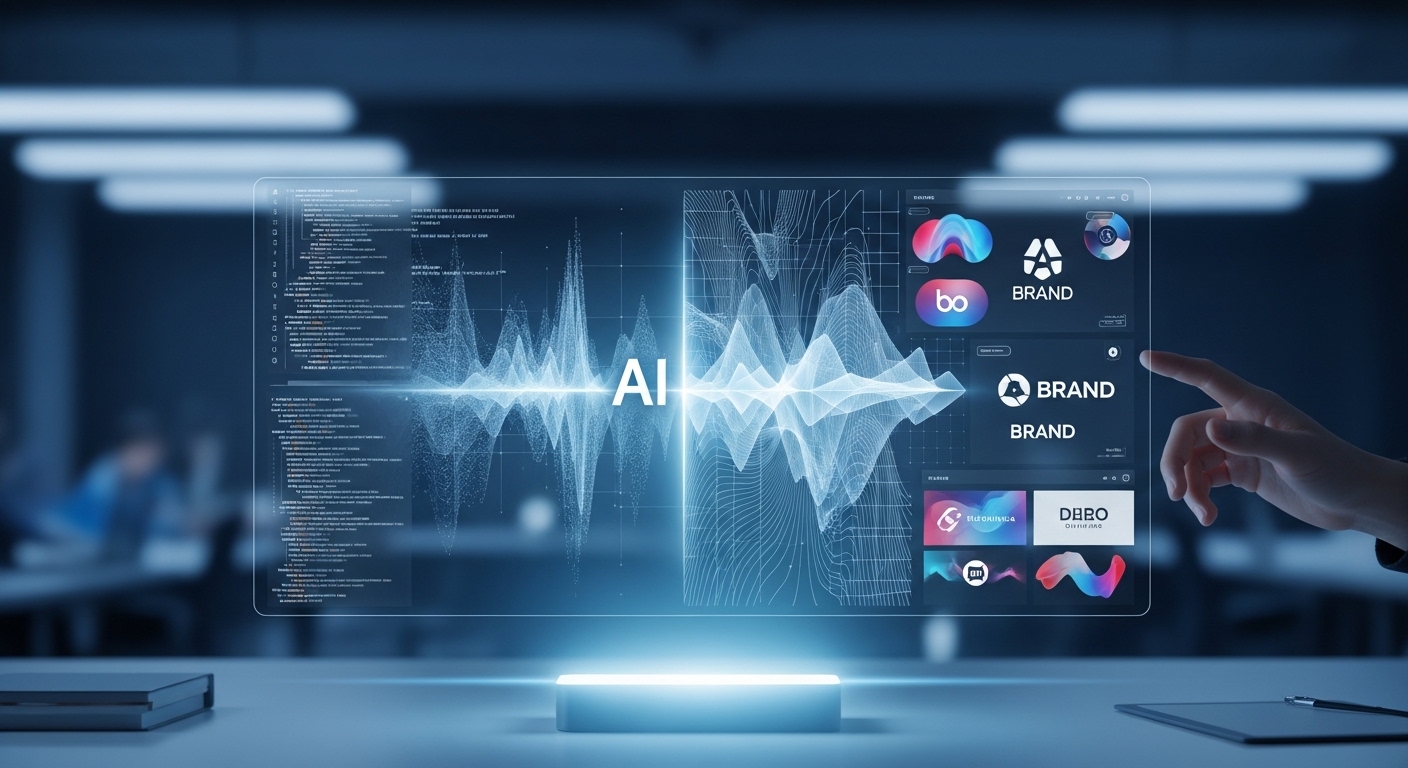
Then AI entered the picture. Suddenly a design system wasn't just a rulebook it became a living engine. AI tools can now take the logic embedded in a brand system and generate new assets, variations, and entire visual directions that still feel on-brand.
Brands aren't choosing between consistency and creativity anymore. They're getting both and that's the real revolution.
The Rise of the AI Creative Partner
There's a lot of fear-mongering about AI replacing designers. But if you actually talk to designers working in 2026, you hear a very different story.
The most compelling creative work right now involves what many professionals call a "multi-tool stack." No single AI does everything well. The designers thriving today are the ones who know which tool to use at which stage and when to step in themselves.
A typical multi-tool workflow looks like this:
- A language model develops brand strategy and core messaging
- A generative image tool builds mood boards and visual directions
- Figma AI or Framer AI handles component design and layout prototyping
- Webflow AI takes care of responsive layout generation
- The human designer makes all final calls on meaning, emotion, and cultural fit
AI doesn't understand why a design choice works in a specific cultural context. That judgment still belongs to the human in the room. What AI does is dramatically expand the range of options faster than any individual ever could.
AI-Enhance Prototyping: The Speed Advantage Nobody Talks About Enough
AI-enhanced prototyping has quietly cut design cycle times by 50 to 70 percent at teams that have adopted it properly. That's not a small efficiency gain it's a fundamental shift in how brand identities get built.
Where traditional design once required a week of wireframing before any stakeholder saw anything, AI-assisted tools can produce multiple interactive layout variations in hours. Teams test more ideas, get feedback earlier, and catch problems before they become expensive.
The tools making this possible in 2026 Figma AI, Framer AI, and similar AI-native environments are no longer experiments. They're infrastructure.
One important trap to avoid, though: speed without direction produces a lot of mediocre work very fast. The brands getting the most from AI prototyping are the ones investing in strong creative briefs upfront. The AI handles execution speed. Humans still define where they're going.
Design System Have Grown Up: From Static Libraries to Dynamic Brand Engines
The old model of a design system looked something like this: a Figma file, a color palette with hex codes, and a PDF brand guidelines document that nobody actually read.
The new model is radically different. In 2026, leading design systems function more like code than guidelines. They're responsive to context, include decision logic rather than just assets, and are built to work with AI tools from the ground up.
A modern brand design system typically includes:
- Color logic - not just hex values, but rules for how colors behave in light mode, dark mode, and different emotional contexts
- Motion libraries - defining brand personality through animation, not just static visuals
- Variable typography - fonts that shift weight and width based on content register
- Accessibility rules - contrast ratios and focus states baked in from the start
- AI-readable documentation - structured so generative tools can apply guidelines automatically
The result: every AI-generated asset inherits the brand's rules automatically. No manual checks needed on every output.
AI-Driven Personalization: When Brand Aesthetics Adapt to the Individual
This is the piece most visual design conversations leave out and it's arguably the most commercially significant shift happening right now.
AI-driven personalization means the visual experience of a brand is no longer identical for every person who encounters it. Interfaces adapt in real time based on behavior, traffic source, and history.
The numbers back it up. Teams implementing AI personalization are seeing:
- 10–25% conversion rate improvement
- Higher engagement and session duration
- Lower friction in user journeys
- Better retention among returning visitors
The practical starting point for most brands is returning visitor AI personalization and traffic-source messaging. Someone arriving from a paid social ad should land in a slightly different brand experience than someone who searched directly. This isn't deception it's relevance.
For design systems, this creates a new challenge: the identity has to be flexible enough to allow meaningful adaptation, but coherent enough that it still feels like the same brand in every version.
Accessibility Automation: The Design Priority That Both Ethical and Strategic
Automated accessibility was barely part of mainstream design conversations three years ago. In 2026, it's a critical priority and brands taking it seriously are building better products for everyone.
AI tools now handle a meaningful portion of WCAG compliance automatically. Here's what that looks like in practice:
- Auto-generated alt text for images
- Real-time contrast ratio flagging
- Heading structure and semantic HTML checks
- Keyboard navigation and focus state validation
- Reduced-motion preference detection for animations
The scale argument is compelling. Accessibility improvements directly benefit 15 to 20 percent of users with some form of disability. But the wider reality is that accessible design consistently produces cleaner, clearer experiences for everybody.
There's also a values dimension that matters in 2026. How a brand handles accessibility is increasingly visible. A polished visual identity doesn't hide an inaccessible experience anymore. The smart move is to build accessibility logic into the design system itself so compliance is built in from the start, not bolted on later.
The Aesthetic Tensions Defining Brand Visuals Right Now
The visual landscape of 2026 isn't unified around a single look. It's defined by competing impulses that brands are navigating in real time.
Imperfection vs. Polish: The Authenticity Arms Race
Audiences have developed a finely-tuned detector for inauthenticity. They can spot an AI-generated stock image from three scrolls away. They notice when everything looks too clean and too frictionless.
Smart brands have responded with deliberate imperfection. Hand-drawn illustrations with wobbly lines. Film-style photography. Typographic layouts that feel assembled rather than machined. The irony is rich: brands are using AI to create imperfection, carefully calibrating exactly how rough something should look.
It's a strategic response to where consumer trust lives. Audiences reward brands that feel honest, textured, and real.
Technical Aesthetics vs. Organic Warmth
On one side: brands leaning into the "console aesthetic" monospace type, terminal-style interfaces, high-contrast palettes that evoke code editors. This reads as credible and precise, especially for dev tools and cybersecurity companies.
On the other: a strong counter-movement toward organic identities. Earthy palettes, natural textures, shapes referencing plant life or geological forms. These communicate sustainability and grounded humanity that the glossy tech world can feel like it lacks.
Neither side is winning because they're speaking to different audiences and different values. The interesting brands are navigating both at once.
Maximalism vs. Assertive Minimalism
The safe, beige-and-white minimalism of the 2010s feels dated now. What's replaced it is assertive minimalism spare and structured, but with bolder color choices, higher contrast, and typography with genuine personality.
At the same time, maximalism is genuinely back. Rich layering, mixed-media compositions, bold color collisions. Brands targeting younger audiences are leaning into visual complexity, reflecting how those audiences actually consume media: fragments, feeds, a dozen things at once.
The Anti-AI Movement: When Rejection Is the Statement
A growing number of designers and brands are deliberately rejecting AI tools and making that rejection part of their identity.
This isn't technophobia. It's a considered aesthetic and ethical position. Brands in craft, artisan, and cultural sectors are using "human-only" creative work as a genuine differentiator. Their argument: when AI-produced visuals become ubiquitous, truly handmade work becomes rare and therefore more valuable.
It's a risky position commercially. But for the right brand, it's the most distinctive position available.
Brand Governance in the Age of AI: The Problem Nobody Warned You About
Here's a practical issue that most trend articles completely ignore and it might be the most important one brands are dealing with right now.
When AI scales your creative output, your brand can drift off-identity without anyone noticing until it's too late.
Think about it. A marketing team of five can suddenly produce the content volume of a team of twenty. More campaigns. More variations. More posts. Each technically on-brand by some measure. But over time, small decisions accumulate. Tone gets inconsistent. Color usage creeps. Typography choices blur. The brand identity slowly loses its edge.
The brands solving this problem well are doing two things:
- Encoding more brand logic into design systems not just visual rules, but voice guidelines, usage restrictions, and decision trees that AI tools can reference
- Running regular brand audits at a cadence that matches their output speed daily publishers audit monthly; weekly publishers audit quarterly
The role of the creative director is shifting as a result. Less individual asset approval, more system design and periodic recalibration. It's a different kind of creative leadership and in many ways, a more strategic one.
The Emotional Design Layer: The Competitive Moat AI Can't Cross

Everything we've discussed AI tools, adaptive systems, personalization, accessibility automation is becoming table stakes. Within a few years, most brands of significant scale will have access to similar capabilities. The technical advantage of being an early AI adopter will compress and eventually disappear.
What won't compress is emotional intelligence in design.
Emotional intelligence in design means understanding not just what your audience likes visually, but why they like it and what deeper need it connects to. It means knowing:
- When a brand needs to feel warm vs. precise
- When humor will land and when it will feel glib
- When an unconventional visual choice will feel brave vs. confused
- When to break a brand rule and when to protect it
These are judgment calls that require genuine cultural fluency, empathy, and creative courage. They can't be automated because they're not principally technical problems they're human ones.
AI can generate a thousand options. Only a human can tell you which one will make someone feel understood. The brands investing in people with that kind of intelligence are building the one competitive moat that AI genuinely cannot cross.
What Smart Brands Are Actually Doing Differently
The brands getting all of this right share a common set of habits:
- Treating AI as infrastructure, not experimentation defined roles, consistent tools, no guesswork about when to use it
- Building design systems that tell AI what to do encoded brand logic that keeps outputs on-brand automatically
- Measuring emotional resonance, not just visual consistency asking "does this feel like our brand?" not just "does this look like our brand?"
- Building for adaptability from day one identities designed to work across app, web, social, AR, wearables, and whatever comes next
- Investing in strong creative briefs because speed without direction just produces mediocre work faster
FAQs
Is AI actually replacing graphic designers in 2026?
No but it's reshaping what designers spend their time on. Repetitive execution work is increasingly automated. Designers are spending more time on strategy, creative direction, and judgment calls that require cultural and emotional intelligence. Strong conceptual thinkers are in higher demand, not lower.
What is a "living" design system, and does my brand need one?
A living design system is a brand framework designed to adapt dynamically rather than stay fixed. Instead of a static logo file and PDF guidelines, it includes rules for how brand elements behave in different contexts. If your brand appears across multiple digital touchpoints, the investment in a dynamic system will save significant time and improve consistency at scale.
How much conversion improvement can AI personalization actually deliver?
Real implementation data puts the range at 10 to 25 percent conversion rate improvement. The higher end typically comes from returning visitor personalization and traffic-source-specific messaging where the adaptation is most relevant to the individual user.
How can a small business use AI in brand design without a big budget?
Start with concept exploration — use AI to generate visual directions early before committing to detailed execution. Then use it for asset variation (adapting designs for different platforms and sizes). Most leading tools have accessible pricing tiers that make this practical without an enterprise budget.
What's the biggest mistake brands make with AI in design?
Using AI to chase trends instead of expressing genuine brand values. The brands that look most dated in 2026 are the ones that used AI to produce whatever visual style was trending six months earlier. AI makes on-trend visuals easy. Human judgment makes on-brand visuals that last.
Is the anti-AI design movement real or just niche contrarianism?
It's real and growing. Brands in craft, artisan, and premium sectors are finding genuine commercial value in positioning their creative work as entirely human-made. As AI-produced visuals become ubiquitous, truly handmade work becomes scarce and for the right audience, more valuable.
Will visual complexity hurt accessibility?
Not if brands build their systems responsibly. The best design systems in 2026 include accessibility logic from the start contrast ratios that work in every mode, motion settings that respect reduced-motion preferences, typography that remains legible at every size. Visual richness and accessibility aren't in conflict when you plan for both from day one.
How do I know if my brand's visual identity is keeping pace?
Put your current brand assets next to the platforms where your audience actually encounters you. Does the brand feel intentional there, or slightly out of place? If you're working from a static identity built more than five years ago, chances are it was designed for a world that looks quite different from the one your audience lives in today.
Final Thoughts
The brands winning in 2026 aren't the ones with the most AI tools they're the ones who know exactly why they're using them. AI has made creative execution faster, cheaper, and more scalable than ever. But it hasn't changed what great branding actually is: a clear point of view, consistently expressed, that makes people feel something real. That part has always been human. And in 2026, it still is.