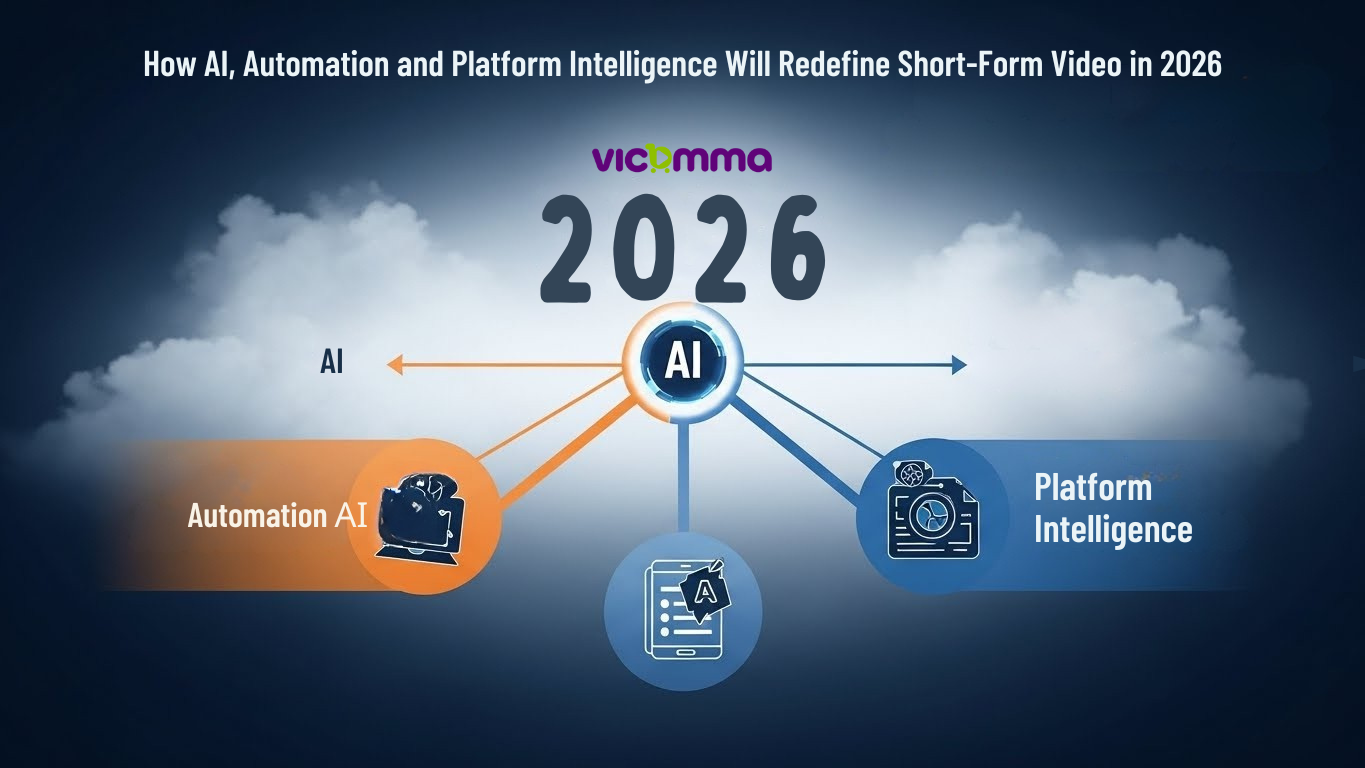
If you feel like your TikTok or Reels feed already knows you better than your own mother does, buckle up. By 2026, the short-form video landscape isn't just going to be about "better algorithms." We are moving into an era where AI, automation, and platform intelligence will fundamentally rewrite how we create, consume, and monetize content. The "scroll" is evolving from a passive pastime into a hyper-personalized, automated reality.
The Death of the Generic Viral Trend
By 2026, the idea of a "global trend" that everyone sees at the same time will feel like a relic of the past. Platform intelligence is becoming so granular that trends will be micro-segmented in real-time. Instead of one "dance challenge" taking over the world, AI will identify sub-niches instantly, served to you based on your biometric engagement and past behavior. Automation tools will allow creators to jump on these micro-trends within seconds of them appearing, using predictive analytics to tell them what will blow up before it actually does.
Generative AI Becomes the New Camera Lens
We are moving away from the "point and shoot" era. In 2026, most short-form videos won't just be edited with AI; they will be built by it. Generative AI will allow creators to film a rough 10-second clip in their bedroom and, with a single prompt, transform the background into a cinematic cyberpunk city or a serene Tuscan villa. This "Virtual Production for the Masses" will democratize high-end filmmaking, making production value a commodity rather than a competitive advantage.
Automated Editing is the New Baseline
Forget spending hours syncing clips to the beat of a song. Automation in 2026 will handle the heavy lifting of post-production. Creators will upload raw footage, and platform-integrated AI will automatically select the best takes, apply color grading based on the mood of the audio, and insert captions that are stylistically aligned with the creator’s brand. This shift allows human creators to focus entirely on the "soul" of the content the ideas and the personality while the machines handle the digital plumbing.
Real Time Language Translation and Dubbing
The "global village" is finally getting a voice. One of the biggest shifts in 2026 will be the seamless integration of AI-powered lip-syncing and dubbing. A creator in Tokyo can post a video in Japanese, and a viewer in New York will see and hear it in perfect English, with the creator’s original voice tone and mouth movements perfectly matched. This destroys the language barrier, allowing short-form creators to scale to a global audience of billions without needing to learn a second language or hire translators.
Platform Intelligence and Hyper-Personalized Narratives

Platforms like TikTok and YouTube Shorts are evolving into "Predictive Entertainment Engines." In 2026, platform intelligence won't just suggest what you might like; it will dynamically alter the content. Imagine a video that has three different endings, and the platform shows you the one that aligns with your specific psychological profile or current mood. This level of automation means that two people watching the "same" video might actually see two different versions tailored specifically to their preferences.
The Rise of Synthetic Influencers and Digital Twins
By 2026, the line between human and AI creators will blur significantly. We will see the rise of "Digital Twins," where human influencers use authorized AI versions of themselves to interact with fans in comments or create daily "filler" content. Automation will allow these digital twins to post 24/7, maintaining a constant presence on the platform while the human creator focuses on high-level strategy or simply taking a nap. This will force a massive shift in how we define "authenticity" in social media manager.
Interactive Shopping via Automated Computer Vision
E-commerce and short-form video are headed for a total merger. Platform intelligence in 2026 will use advanced computer vision to identify every single item in a video from the shirt the creator is wearing to the lamp in the background automatically tagging them for purchase. You won't have to ask "Where did you get that?" in the comments anymore. Automation will create a seamless "see it, want it, buy it" pipeline that happens entirely within the video player, powered by AI that knows your size, style, and budget.
AI as the Ultimate Creative Director
Creators in 2026 will treat AI as a co-pilot rather than a tool. Platform intelligence will provide real-time feedback during the filming process. Imagine an app saying, "Hey, your energy is a bit low in this take," or "Statistically, if you mention the product in the first two seconds, your conversion will double." This automated coaching will raise the floor for content quality, making it easier for new creators to break into the space while challenging veterans to keep innovating.
Algorithmic Transparency and the Ethics of Automation
As AI takes over, 2026 will be a year of reckoning for digital ethics. Platforms will be forced to implement "Content DNA" labels, showing exactly how much of a video was generated by AI versus captured by a human. Automation will also be used to police deepfakes and misinformation more aggressively. The "Platform Intelligence" of 2026 isn't just about showing you funny cats; it's about maintaining a layer of trust in an era where seeing is no longer necessarily believing.
The Shift from Search to Discovery via AI
In 2026, we won't "search" for content; content will find us. Platform intelligence will move toward a "push" model where the AI understands our intent before we even voice it. If you’ve been looking at hiking boots on a browser, your short-form video feed won't just show you ads; it will show you automated "how-to" videos for local trails, all curated by an AI that knows your fitness level and the current weather in your area.
Monetization 2.0 and Automated Revenue Sharing
The way creators get paid is also getting an automated facelift. In 2026, platform intelligence will allow for "Micro-Leasing" of content components. If an AI uses a 3-second clip of your video as a background for someone else’s automated creation, you could receive a micro-payment instantly via blockchain or automated clearing houses. This creates a circular economy where everyone the original creator, the AI editor, and the platform gets a slice of the pie automatically.
Why Quality Still Beats Automation

Despite all the robots, 2026 will prove that human connection is the ultimate currency. AI can replicate a voice, a face, and a trend, but it struggles to replicate genuine human vulnerability and "the unexpected." The creators who thrive in 2026 will be those who use automation to remove the "boring stuff" so they can lean harder into their unique, weird, and messy human traits. Technology will redefine the medium, but humans will still define the message.
Preparing for the 2026 Video Revolution
To stay ahead of the curve, video editor, and brands need to stop looking at AI as a threat and start looking at it as an administrative assistant. Start experimenting with generative background tools and automated captioning today. The learning curve for these "Platform Intelligence" tools is steep, and those who wait until 2026 to adopt them will find themselves shouting into a void that has already moved on to the next automated frontier.
The New Content Lifecycle
Finally, the lifecycle of a video in 2026 will be much longer than it is today. Currently, a video "dies" after a few days. In 2026, platform intelligence will "re-skin" old content automatically to keep it relevant. An old travel vlog could be automatically updated with new prices, new weather data, and refreshed music, allowing "evergreen" content to actually stay green forever. This shift in automation means that every piece of content you create is a long-term asset, not a fleeting moment.