Something strange happened in marketing over the past year. The playbook that worked for decades stopped working. Mass campaigns? They're falling flat. Generic messaging, People scroll right past it. And those carefully polished brand videos that cost a fortune to produce. They're getting outperformed by a 22-year-old with a smartphone and an authentic story to tell.
Welcome to 2026, where artificial intelligence, hyper-personalization technology, and a new generation of creator tools have completely flipped the script on how brands communicate with their audiences. If you're still doing marketing the way you did it two years ago, you're already behind.
The Perfect Storm Why Everything Change at Once
Three separate technological shifts decided to mature at exactly the same time. That's not a coincidence it's a perfect storm that's forcing marketers to rethink everything.
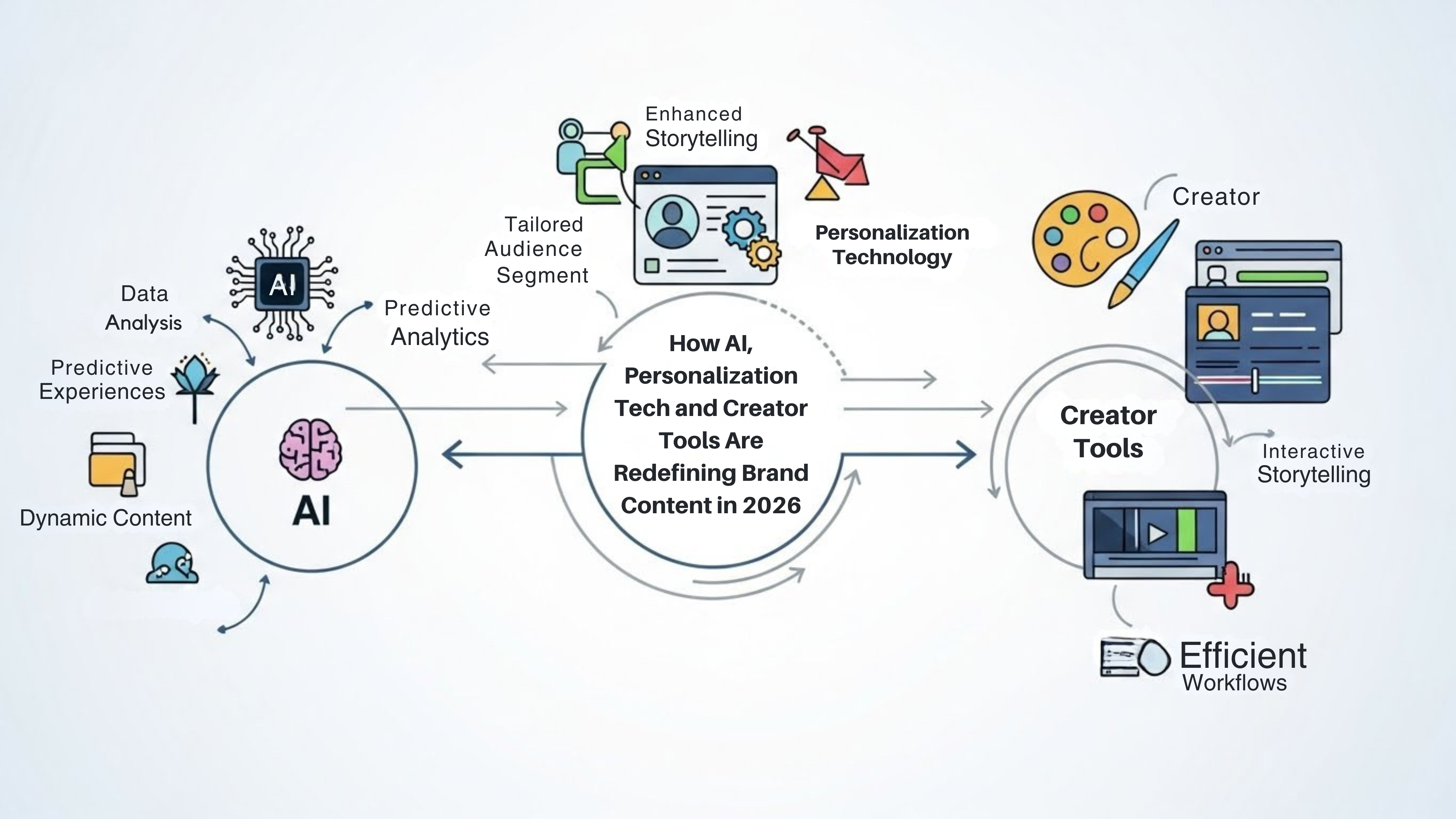
AI didn't just get better at writing emails. It became capable of understanding context, learning brand voices, and making real-time decisions about which message to show which person at which moment. Personalization technology evolved from "Hy" into systems that can genuinely adapt every customer touchpoint based on behavior happening right now. And creator tools? They've gotten so sophisticated that professional-quality content creation production is now accessible to anyone with a good idea.
The brands winning in 2026 aren't picking one of these tools and going all in. They're weaving all three together into content ecosystems that feel alive, responsive, and impossibly personal. Let's dig into how each piece works and how they connect.
AI Has Graduated From Assistant to Strategic Partner
Remember when AI was that fun thing you used to generate blog post ideas? Those days feel ancient now. In 2026, artificial intelligence has become the backbone of how content gets made, distributed, and optimized.
The most significant shift is what marketers call hyper-personalization at scale. Modern AI tools don't just segment your audience into broad buckets anymore. They create micro-segments that change in real time based on what people are doing right now. When someone lands on your website after clicking an Instagram ad, the page they see can be completely different from what someone sees after searching on Google and both experiences feel intentionally designed.
AI Now Learns Your Brand Voice (And Actually Gets It Right)
One of the biggest breakthroughs this year involves brand voice consistency. Tools like Jasper's Brand Voice 2.0 and similar platforms now genuinely learn how your company sounds. You feed them examples, set parameters, and they produce content that doesn't feel robotic or generic.
This matters more than it might seem. Before this capability existed, brands using AI at scale had a consistency problem. Blog posts sounded different from social media posts, which sounded different from email newsletters. Now, the AI maintains your unique personality across every channel, which builds the kind of trust that converts browsers into buyers.
Predictive Analytics Are Finally Practical
Here's where things get really interesting. AI-powered predictive analytics have moved from "experimental feature" to standard practice. Instead of looking at last month's campaign performance and making educated guesses, marketers now have tools that project what's likely to work before they spend the money.
These systems analyze customer behavior patterns, market trends, and campaign historical data to forecast outcomes. Want to know which ad creative will probably convert best? The AI can tell you with surprising accuracy. Wondering when your audience is most receptive to certain types of messages? The system already knows.
Key Technologies Transforming Brand Content in 2026
| Technology Category | What It Does | Impact on Brand Content | Best Use Cases |
|---|---|---|---|
| AI Content Generation | Creates text, images, and video from prompts while maintaining brand voice | Scales content production by 5-10x while maintaining quality | Blog posts, social media, product descriptions, ad copy |
| Hyper-Personalization Engines | Delivers unique experiences to each user based on real-time behavior signals | Increases engagement by matching content to intent and context | Website pages, email sequences, product recommendations |
| Creator Management Platforms | Connects brands with creators and manages relationships at scale | Brings authentic voices into brand content ecosystems | UGC campaigns, influencer partnerships, community building |
| Predictive Analytics Tools | Forecasts campaign performance before launch | Reduces wasted ad spend and improves targeting decisions | Budget allocation, audience targeting, content optimization |
| Cross-Channel Orchestration | Coordinates messaging across all touchpoints simultaneously | Creates consistent customer journeys regardless of channel | Omnichannel campaigns, customer lifecycle marketing |
| AI Video Generation | Produces video content from scripts or text inputs | Democratizes video marketing for smaller teams | Social media videos, ads, product demonstrations |
Personalization Has Evolved Beyond Recognition
Let's be honest about something. For years, "personalization" in marketing meant little more than dropping someone's first name into an email subject line. That's not personalization that's a mail merge trick from 1995.
True personalization in 2026 looks completely different. It means the content someone experiences actually changes based on who they are, what they've done, and what they're likely to do next. The email they receive at 7 AM reflects the products they browsed yesterday. The ad they see on Instagram connects to the cart they abandoned this morning. The landing page they hit adapts to match the search term they typed.
First-Party Data Became Non-Negotiable
Here's the uncomfortable truth that forced this evolution: third-party cookies are basically dead, and privacy regulations keep getting stricter. Brands that built their personalization strategies on borrowed data suddenly found themselves with nothing to work with.
The smart ones pivoted hard toward first-party data. They built loyalty programs. They created genuinely valuable content that people willingly exchanged their information to access. They turned every customer interaction into an opportunity to learn something new about preferences and behaviors.
This shift actually made personalization better. When you're working with data people gave you directly, you can do more with it ethically and legally. The messaging becomes more relevant because it's based on actual relationships rather than shadowy tracking across the internet.
Cross-Channel Consistency Finally Works
For years, marketers talked about omnichannel experiences without actually delivering them. Your email system didn't talk to your ad platform, which didn't connect to your website personalization tool. Customers noticed the disconnection even if they couldn't articulate it.
The convergence of advertising technology and marketing technology in 2026 fixed this. Modern platforms share data across touchpoints in real time. The same intelligence that personalizes your email now powers your paid media, your website, your app, and your special offers. Everything feels like one connected conversation rather than a bunch of separate channels shouting different things.
Creator Tools Changed Who Makes Content
Here's the development that's really shaking up brand content: creator tools got so good that professional quality is no longer exclusive to professionals.
The creator economy hit $234.65 billion globally in 2026, growing at roughly 22.5% year over year. U.S. brands alone are spending an estimated $43.9 billion on creator-driven advertising this year. Those aren't experimental budgets that's serious investment in a new way of producing content.
Creators Became Strategic Partners, Not Ad Slots
The smartest brands stopped treating creators like media buys. They started treating them like business partners.
This shift matters enormously. When you buy an Instagram post from an influencer, you get one piece of content that lives briefly in someone's feed. When you build a genuine partnership with a creator who understands your brand, you get an ongoing relationship that produces content, generates authentic testimonials, and creates community around your products.
The best creator partnerships now involve what industry folks call "creator loyalty infrastructure." You're not just briefing connect with UGC creators on campaigns you're investing in relationships that compound over time. Priority access, economic upside, protection from competitor poaching. These creators become extensions of your brand team rather than vendors you hire occasionally.
Micro-Creators Deliver Better Results Than Celebrities
Something counterintuitive emerged from the data this year. Smaller creators with tighter communities consistently outperform bigger names when it comes to actual conversions.
The numbers make sense when you think about it. A nano-creator with 5,000 engaged followers who trust their recommendations will drive more purchases than a celebrity with millions of followers who barely know the product exists. The relationship between small creators and their audiences resembles friendship and people buy what friends recommend.
This insight is reshaping how brands allocate creator budgets. Instead of spending everything on one big name, they're building networks of smaller voices who each reach specific communities authentically.
AI Powers Creator Discovery and Management
Finding the right creators used to require manual research, lots of spreadsheets, and educated guessing. Now AI handles most of that work.
Modern creator platforms use machine learning to match brands with creators whose audiences align with their target customers. The algorithms analyze engagement patterns, content style, audience demographics, and historical performance to recommend partnerships that are likely to succeed.
Beyond discovery, AI helps manage creator relationships at scale. Automated workflows handle briefing, content approval, payment processing, and performance tracking. Brands that used to manage a handful of creator partnerships can now coordinate hundreds simultaneously without drowning in administrative work.
Authenticity Became the Ultimate Competitive Advantage
All this technology creates an interesting paradox. As AI-generated content floods every channel, audiences have developed a sixth sense for detecting what's real and what's manufactured.
Content that feels human imperfect, unpolished, genuine now performs better than slick production in many contexts. Brands are deliberately seeking what industry watchers call "micro-moment authenticity." Behind-the-scenes glimpses that aren't staged. Employee stories that feel spontaneous. Customer testimonials that obviously weren't scripted.
The Hybrid Model Works Best
The winning formula in 2026 isn't choosing between AI efficiency and human authenticity. It's combining both strategically.
AI handles research, drafts, production logistics, and optimization. Humans inject empathy, creativity, cultural understanding, and the lived experience that machines can't replicate. The best content comes from this partnership produced at scale with AI assistance, but guided by human judgment about what actually matters to people.
Brands trying to automate everything end up with content that technically works but emotionally falls flat. Brands refusing to use AI get outpaced by competitors producing five times as much material. The sweet spot sits right in the middle.
What This Means For Your Content Strategy

Everything we've discussed points toward some clear strategic imperatives. If you're responsible for brand content in any capacity, here's what deserves your attention.
Build First-Party Data Assets Aggressively
You cannot personalize what you don't understand. Invest in mechanisms that collect customer information ethically and with clear consent. Loyalty programs, gated content, preference centers, direct feedback loops these become the foundation everything else builds on.
Create Content Designed For AI Consumption
Your content isn't just read by humans anymore. AI assistants, search engines, and answer engines consume it too. Structure your information clearly. Include extractable summaries and facts that AI systems can easily interpret and cite. Think about how ChatGPT or Perplexity might reference your content when someone asks a question you can answer.
Invest In Creator Relationships, Not Just Creator Campaigns
Stop thinking about influencers as a campaign tactic and start thinking about them as an ongoing channel. Build relationships with creators who genuinely connect with your brand. Give them reasons to stay loyal. Treat creator content as a core asset worth investing in.
Let AI Handle Scale While Humans Handle Meaning
Use AI tools to produce more content faster without burning out your team. But keep humans in charge of strategy, emotional resonance, and the final quality check. The technology augments your capabilities it doesn't replace the judgment that makes content actually connect.
The Bottom Line
Brand content in 2026 looks nothing like it did just a few years ago. AI handles much of the production. Personalization happens at a level that would have seemed impossible recently. Creators have become essential partners rather than occasional tactics. And authenticity real, human, imperfect authenticity matters more than ever.
The brands thriving right now figured out how to weave these elements together. They use AI to work smarter, not just faster. They treat personalization as an expectation rather than a nice-to-have. They build genuine relationships with creators instead of buying one-off posts. And they never let technology make them forget that at the end of every channel, every platform, and every touchpoint sits a human being who just wants to feel understood.