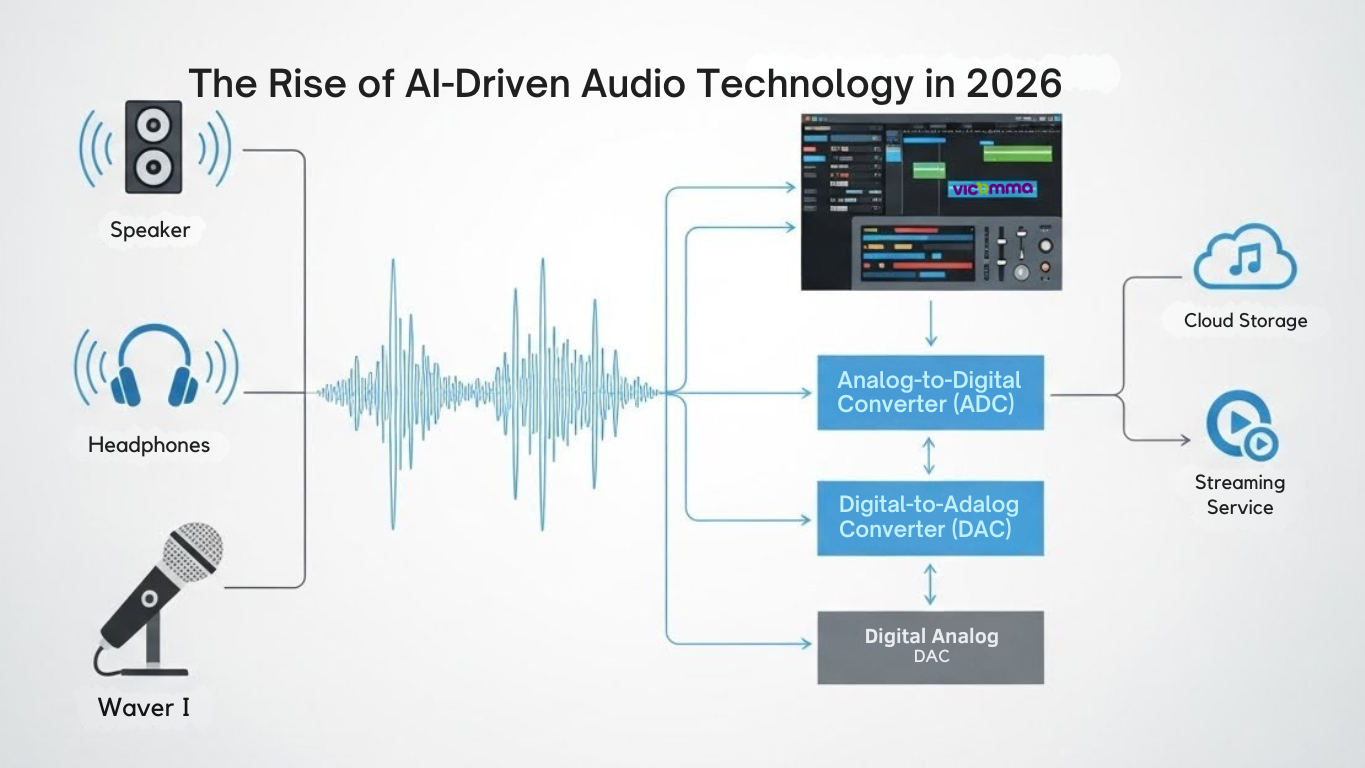
Audio in 2026 doesn’t just play sound anymore. It listens, learns, and responds like a helpful friend who knows your mood before you say a word. From podcasts that adjust to your listening speed to music apps that remix songs in real time, The Rise of AI-Driven Audio Technology in 2026 has quietly changed how we live, work, and relax. In this blog post, you’ll discover how this shift happened, why it matters, and what makes today’s audio tools far smarter than anything we used just a few years ago. You’ll also see how this article goes deeper than other blogs on the topic by adding real-world use cases, human impact, and future-facing insights that competitors often skip.
What AI Driven Audio Technology
AI-driven audio technology in 2026 refers to sound systems and software that use artificial intelligence to understand, adapt, and improve audio experiences automatically. Instead of fixed settings, these systems learn from behavior, voice tone, background noise, and even emotional cues. This means clearer calls, more personal music, and audio that fits your life instead of forcing you to adjust to it.
How We Moved From Basic Audio to Intelligent
The journey toward The Rise of AI-Driven Audio Technology in 2026 started with simple voice assistants and noise-canceling headphones. Over time, AI learned how people actually use audio editors. It noticed patterns like when listeners rewind podcasts or lower volume during meetings. By 2026, audio tools don’t just react. They predict needs and act first, which saves time and reduces frustration.
The Role of Machine Learning in Smarter Sound
Machine learning sits at the heart of modern audio systems. In 2026, these systems train themselves using millions of sound samples and real-world listening habits. They learn how different voices sound in noisy places and how music preferences change during the day. This learning process allows audio tools to feel personal without users having to explain anything.
Why Personalization Became the Biggest Audio Trend
Personalization drives The Rise of AI-Driven Audio Technology in 2026 more than any other factor. People no longer want one-size-fits-all sound. AI now adjusts bass for your ears, changes podcast tone based on mood, and even rewrites audio summaries in your preferred voice style. This level of customization keeps users loyal and deeply engaged.
How AI Changed Music Creation in 2026

Music creation looks very different in 2026. Artists now work alongside AI tools that suggest melodies, clean vocals, and generate background harmonies. These tools don’t replace musicians. They speed up creative work and remove boring technical steps. Independent artists especially benefit because they can produce studio-quality sound without huge budgets.
The Podcast and Audiobook Boom Powered by AI
Podcasts and audiobooks exploded in popularity thanks to The Rise of AI-Driven Audio Technology in 2026. AI tools now remove filler words, balance volume automatically, and translate audio into multiple languages while keeping the original voice. Listeners enjoy smoother, clearer content, and creators reach global audiences faster than ever.
AI Voices That Finally Sound Human
One major breakthrough in 2026 involves AI-generated voices that sound warm, emotional, and natural. Gone are the robotic tones of early text-to-speech voiceovers. Modern AI voices pause naturally, laugh lightly, and change tone based on context. This makes them perfect for customer support, navigation apps, and educational content.
Real-Time Audio Translation Without Awkward Delays
Language barriers shrink thanks to AI-driven audio translation. In 2026, people speak naturally while AI translates their voice into another language almost instantly. The translated voice even keeps the speaker’s tone and emotion. This advancement improves travel, global business, and online learning in ways written translation never could.
Noise Control That Understands Context
Noise cancellation became smarter in 2026. AI doesn’t just block sound blindly. It understands context. It lowers background noise during calls but lets in important sounds like alarms or someone calling your name. This balance improves safety while keeping audio clear and comfortable.
AI Audio in Cars Became a Game Changer

Cars became rolling sound studios during The Rise of AI-Driven Audio Technology in 2026. AI systems adjust sound based on speed, road noise, and passenger position. Voice assistants understand casual speech better, making driving safer. Even navigation voices adapt tone based on stress levels detected in the driver’s voice.
Healthcare and Wellness Audio Took a Big Leap
AI-driven audio plays a huge role in healthcare in 2026. Smart hearing aids adapt instantly to surroundings. Therapy apps use calming audio that responds to breathing patterns. Doctors analyze voice changes to detect early signs of illness. These applications show how sound can support both physical and mental health.
Education Became More Inclusive Through AI Audio
Education benefits deeply from The Rise of AI-Driven Audio Technology in 2026. Students listen to lessons that adjust speed and clarity automatically. AI-generated summaries help learners review faster. Students with hearing or reading difficulties gain better access to information through adaptive audio support.
Business Communication Sounds Clearer and Smarter
In workplaces, AI improves meetings and calls. Audio tools remove echo, highlight key moments, and generate voice-based summaries. Team members spend less time repeating themselves and more time acting on information. This quiet improvement boosts productivity without adding extra tools.
FAQs
Is AI-driven audio technology safe to use daily?Yes, most systems in 2026 follow strict data protection rules. Users can control permissions, and responsible companies encrypt voice data to keep it secure.
Will AI replace human musicians and voice artists?
No, AI supports creativity rather than replacing it. Artists still lead the process, while AI handles repetitive or technical tasks.
Do I need expensive devices to enjoy AI audio?
Not anymore. Many AI audio features work on regular smartphones, laptops, and cars thanks to cloud-based processing.
Can AI audio help people with hearing problems?
Absolutely. AI-powered hearing tools adapt to environments and voices, making conversations clearer and less tiring.
Is AI audio only useful for entertainment?
Not at all. It improves education, healthcare, business communication, and accessibility just as much as entertainment.
Final Thoughts
The Rise of AI-Driven Audio Technology in 2026 shows how technology can quietly improve life without demanding attention. It makes sound clearer, kinder, and more human. Instead of flashy features, it focuses on comfort, inclusion, and creativity. That’s why this audio revolution feels less like a tech upgrade and more like a natural part of everyday life.